The Question Every Buyer Is Asking Me Right Now: ARM, Fixed, or a Buydown?
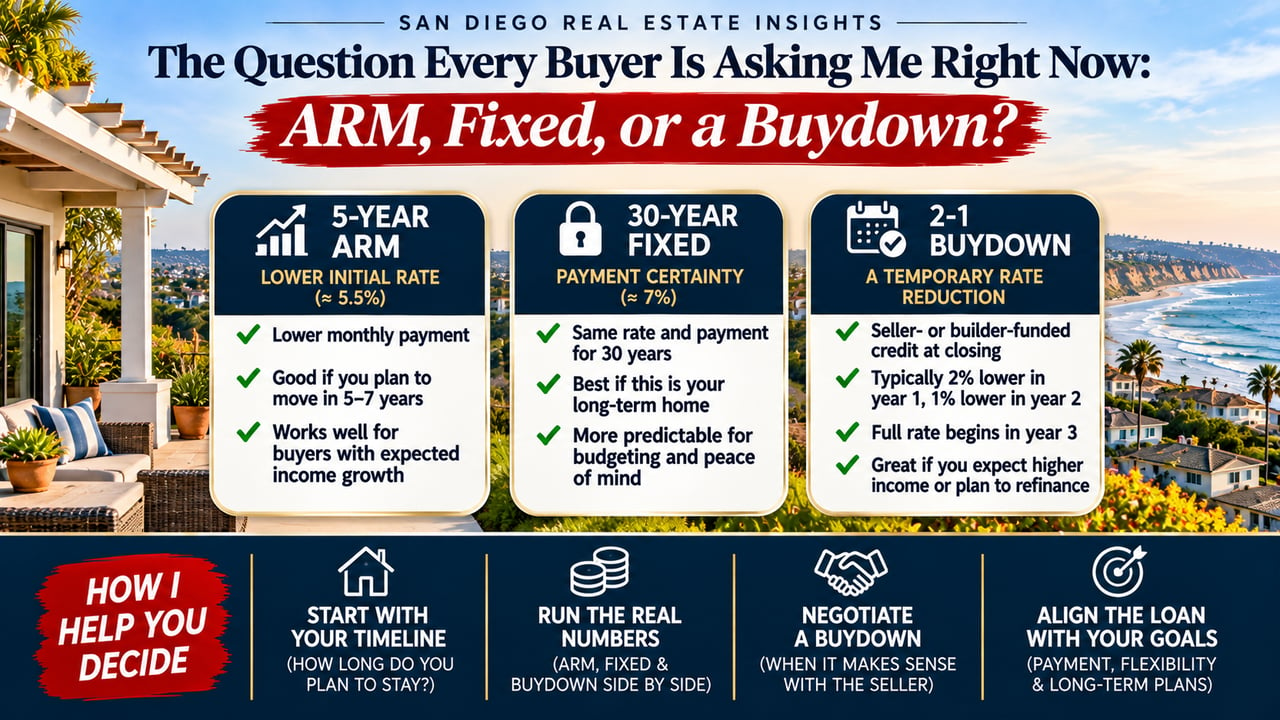
If I had to pick the one question coming up most often in my conversations with buyers right now, it's this one. Thirty-year fixed rates are sitting in the low 7 percent range, five-year adjustable rate mortgages are running closer to 5.5 percent, and that gap is wide enough that almost every buyer I talk to eventually asks some version of the same thing. Should I just take the ARM and save on the payment, or am I better off locking in a fixed rate even though it costs more every month? Here's how I actually walk people through it.
Why this question wasn't nearly as common a few years ago
When fixed and adjustable rates sit close together, the decision barely matters, you take the fixed rate for the certainty and move on. That's not the environment right now. The spread between a 30-year fixed and a 5-year ARM is wide enough that it changes the monthly payment on a typical North County purchase by a meaningful amount, often several hundred dollars a month depending on loan size. That's real money, and it's exactly why this question has moved from a minor footnote in a financing conversation to the first thing a lot of buyers want to talk through once they see what each option actually costs them.
How I actually answer it
The first thing I ask isn't about the rate at all, it's about the timeline. How long do you realistically expect to be in this house. That one question does more to point someone toward the right answer than any rate comparison does on its own, because an ARM and a fixed rate aren't really competing products, they're built for different situations.
If someone tells me they expect to be in the home five to seven years, maybe because it's a starter home before a move-up purchase, or because their job situation might change, or because they're buying with a plan to refinance once rates come down, that's exactly the profile where a 5-year ARM tends to make sense. You get the lower payment during the period you're actually planning to be in the loan, and the risk of the rate adjusting upward after that initial period matters a lot less if you're not planning to still be in that loan when it happens.
If someone tells me this is the house, the one they want to raise kids in or retire in, I steer them toward the fixed rate even though the payment is higher today. Payment certainty for ten or twenty years is worth something on its own, especially for a buyer who's already stretching to make a purchase work and doesn't want a variable in their biggest monthly expense down the road.
When an ARM actually makes sense
Beyond the move-up buyer, I see ARMs make the most sense for buyers who are confident their income is going to grow in a predictable way, someone early in a career with a clear trajectory, or a buyer who's using the lower initial payment to qualify for a home in a neighborhood they'd otherwise be priced out of today, with a real plan to refinance once rates ease. I'm honest with these buyers that refinancing isn't guaranteed to happen on their timeline, rates could stay elevated longer than anyone expects, so I want to see that they can actually handle the adjusted payment if the refinance doesn't happen when they hope it will, not just that they're comfortable with the lower payment today.
When I steer buyers toward the 30-year fixed
For buyers who are already at the edge of their comfort zone on the monthly payment, I don't want to add a second variable on top of the one they're already managing. If someone is stretching to make a number work today, the last thing I want is for that same person to be managing a rate adjustment in five years on top of whatever else has changed in their life by then. The fixed rate costs more now, but it's the version of this decision that doesn't require anything else to go right later.
The third option that doesn't come up enough: a rate buydown
This is the piece I think more buyers should be asking about, because it doesn't get nearly the attention ARMs do, even though it's increasingly on the table in today's market. I had this exact conversation with a buyer in Carmel Valley this past year. We went into the seller negotiation specifically asking for a credit toward a 2-1 buydown, structured so the first year's rate came in 2 percentage points below the note rate, the second year came in 1 percentage point below it, and then the loan settled into its regular rate from year three on. The seller agreed to fund it, which meant my buyer got into the home now, at a payment that actually worked for their budget in year one and two, with the plan to refinance down the road once rates ease rather than waiting on the sidelines for that to happen first.
That's really the whole case for a temporary buydown in one example. It's funded as a credit at closing, either paid by the seller or built into a builder's incentive package on new construction, and it's become a lot more common specifically because the market has softened. Sellers who are sitting on a home longer than they expected are increasingly willing to offer a rate buydown instead of simply cutting their price, because it's often a more efficient way to make the deal work for the buyer without the seller taking as big a hit on the sale price itself.
A 2-1 buydown is a genuinely good fit for a buyer who expects their income to step up over the next couple of years, or who's fairly confident they'll refinance before the buydown period ends anyway, since it gives you real payment relief exactly during the window when a new house payment usually feels the tightest. Where I tell buyers to be careful is assuming the buydown is free money with no catch. You still need to qualify for the loan at the full note rate in most cases, not the reduced year-one rate, so it's not a tool for stretching into a home you couldn't otherwise afford, it's a tool for easing into a home you can afford but where the first couple of years would otherwise feel tight.
Why I'm raising this with buyers more than I used to
Here's the part that ties all three of these options together right now. With pending sales down and sellers more willing to negotiate than they were a year or two ago, buyers actually have real leverage to ask for a seller-paid buydown as part of their offer, not just accept whatever rate their lender quotes them. A year or two ago, in a tighter market, asking a seller to fund a rate buydown on top of an already competitive offer would have been a much harder ask. Today, it's a reasonable, increasingly common part of the negotiation, and I'd rather a buyer know that option exists before they write an offer than find out about it after the fact.
How I think about all three together
When a buyer brings me this question, I'm really walking through three separate levers that can each move independently, how long they plan to stay, how much payment certainty they need, and whether a seller-funded buydown is realistically on the table for the specific home they're considering. The ARM versus fixed decision gets most of the attention because it's the most visible rate comparison, but the buydown conversation is often where I can actually create value in a negotiation, since it's a lever that depends as much on market conditions and the specific seller's situation as it does on the buyer's own finances.
None of these is a universally right answer. I've put equally qualified buyers into an ARM, a fixed rate, and a buydown in the same month, because the right call depends entirely on that buyer's specific plans, not on which option sounds best in the abstract.
What this means if you're buying right now
Don't let the headline rate be the only number you look at. Ask your lender to run the real numbers on an ARM, a fixed rate, and a 2-1 buydown side by side for your specific loan amount, and be honest with yourself about how long you actually expect to be in the home, since that answer matters more than the rate spread itself. And if you're making an offer in today's market, ask whether a seller-paid buydown is something worth including in your negotiation before you assume the rate you're quoted is the rate you're stuck with.
What this means if you're selling right now
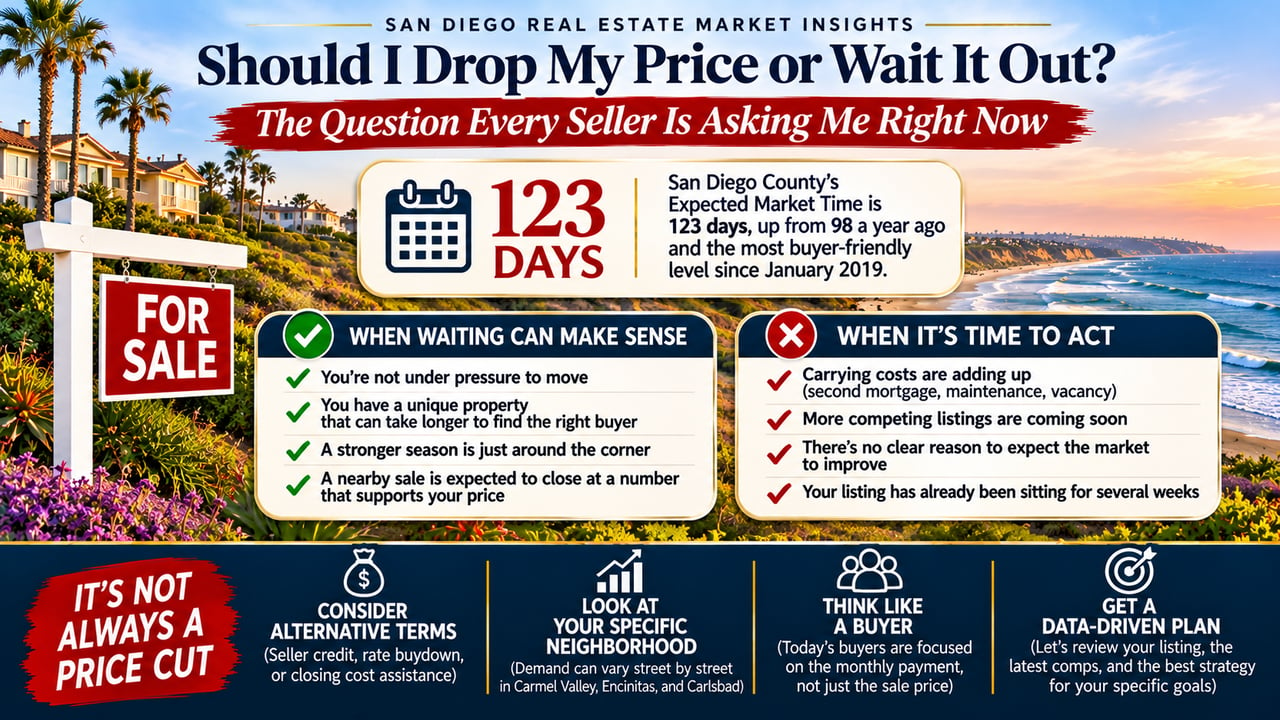
If your home has been sitting longer than you expected, a rate buydown is worth considering as an alternative to a straight price cut before you drop your number. It can be a more efficient way to get a deal done, since it directly addresses the thing most buyers are actually worried about, their monthly payment, without you having to give up as much on the headline sale price. It's worth discussing with your agent as a tool before assuming a price reduction is the only lever available.
The bottom line
The ARM versus fixed question I'm getting from buyers right now doesn't have one right answer, it depends on how long someone plans to stay, how much payment certainty they need, and whether a seller-funded buydown is realistically available on the home they want. I've walked buyers into all three options in the same month, because the right financing structure follows the buyer's actual plans, not the other way around. If you're weighing this decision on a home you're considering in North County, reach out and we'll run the real numbers together.