How to Check a San Diego HOA's Financial Health Before You Buy a Condo
Condo prices across San Diego have softened as buyers grow wary of rising HOA dues, mandatory balcony inspections under SB 326, and climbing insurance costs. That means the difference between a good deal and an expensive mistake now comes down to paperwork most buyers never think to ask for. Here's exactly what to request, what the numbers mean, and what could stop your loan even after you've fallen in love with the unit.
Start with the HOA disclosure package
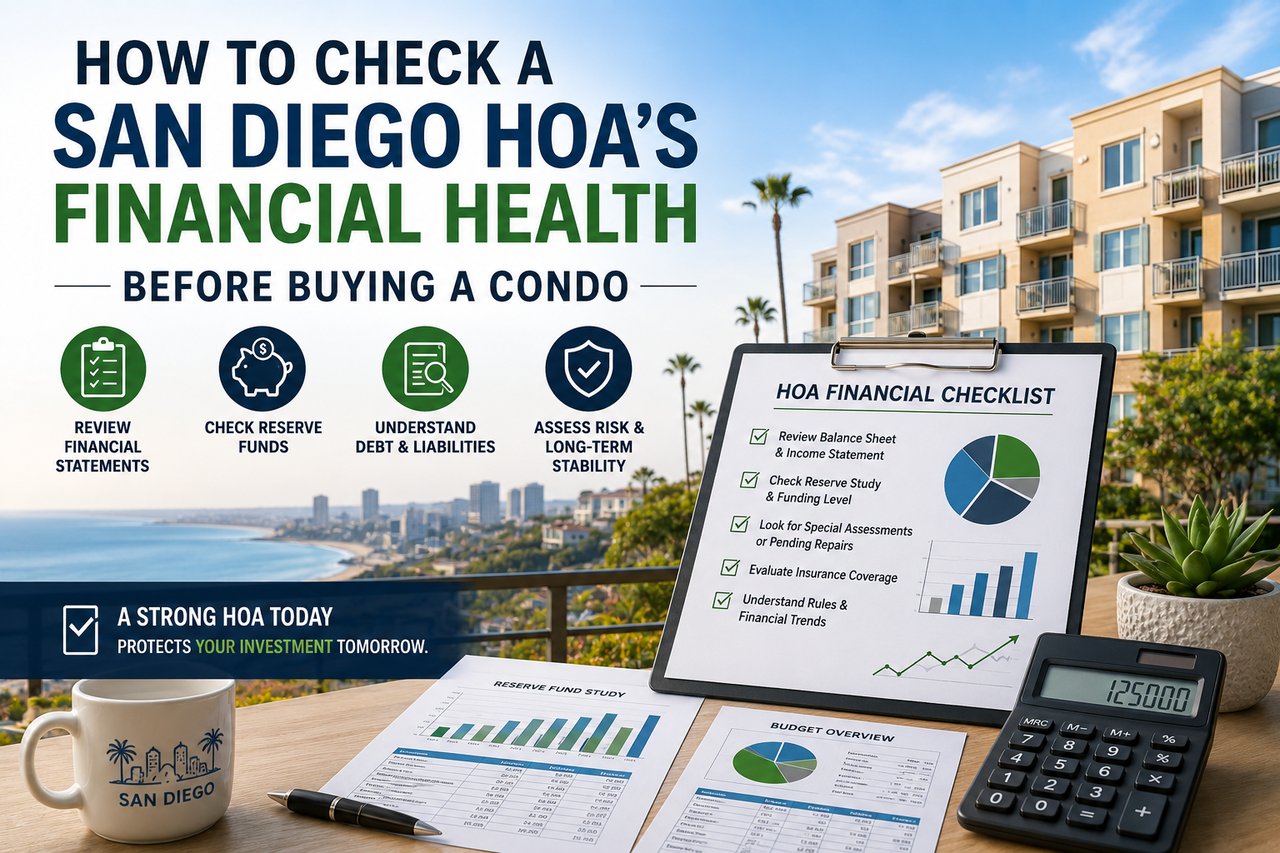
California law requires the seller and the association to hand over a bundle of documents commonly called the HOA disclosure package or resale certificate before you close. That packet should include the governing documents such as the CC&Rs, articles of incorporation, bylaws, and operating rules, along with the association's most recent financial statement, the current year's approved budget, the reserve study, a summary of the HOA's insurance coverage, and a disclosure of any outstanding assessments or pending litigation. It should also flag any board approved fee increases that haven't taken effect yet.
As of January 1, 2026, this packet got more important. California's SB 410 amended the Davis-Stirling Act to require that exterior elevated element inspection reports, the reports produced under SB 326 for balconies, decks, and walkways, be included in the standard resale disclosure package. That means you no longer have to dig for this information separately. If a seller or HOA can't produce it, that's a signal worth taking seriously.
The single number that matters most: percent funded
Every reserve study includes a percent funded figure, and it's the most useful number in the entire packet. It answers a simple question: of the money the HOA should have saved for future repairs, how much does it actually have? You calculate it by dividing the current reserve balance by the fully funded balance the study recommends. An HOA that should have $500,000 set aside but only has $350,000 on hand is 70 percent funded.
The industry benchmarks are consistent enough to use as a quick screen. A reserve fund between 70 and 100 percent funded is considered healthy, meaning the HOA can cover anticipated repairs without leaning on a special assessment. Between 30 and 70 percent calls for caution, since the association is behind on saving but not necessarily in crisis. Below 30 percent is a real warning sign, associated with a higher risk of deferred maintenance, surprise special assessments, and buildings that struggle to qualify for conventional financing altogether.
One more figure worth checking: the contribution gap, meaning the difference between what the HOA is actually putting into reserves each year and what the study recommends. A low percent funded number paired with a board that's closing the gap year over year is a very different situation than one where the shortfall keeps growing. The reserve study will show both if you know to look.
Check whether the loan itself will even work
Even if the HOA's finances look fine, your financing can still hit a wall, and 2026 made this more likely, not less. Fannie Mae's Lender Letter 2026-03 raised the minimum reserve contribution requirement for warrantable condos from 10 to 15 percent of the association's annual budgeted assessment income. Associations that don't meet that threshold risk losing warrantable status, which affects whether conventional lenders will finance units in the building at all.
Fannie Mae and Freddie Mac also eliminated the Limited Review option as of August 3, 2026, which previously let smaller or established projects skip some documentation. Every condo loan application now requires a Full Review, and lenders are building in an extra two to four weeks of closing time to account for it. On the upside, both agencies dropped the old rule that flagged a building as non-warrantable if more than half its units were investor owned, which had quietly killed financing on plenty of otherwise solid buildings.
The practical takeaway is that a condo can look financially sound on the HOA's books and still turn into a financing headache. Ask your lender to run the building through a condo questionnaire, typically Form 1076, before you get too far into the process.
Red flags worth asking about directly
A few things are worth asking the HOA or listing agent about by name rather than waiting for them to show up in the paperwork. Ask whether any special assessment has been approved or discussed in the last two years, even if it hasn't been billed yet. Ask whether there's pending or threatened litigation, particularly anything related to construction defects, since that alone can make a building unwarrantable. Ask to see board meeting minutes from the past six to twelve months, since deferred maintenance and funding shortfalls tend to show up in board discussion long before they show up in a formal notice to owners. And if the building hasn't completed its SB 326 inspection, ask why, since noncompliant associations are now facing penalties of up to $500 a day.
Bringing it together
None of this needs to scare you off a condo purchase. Plenty of well run San Diego associations are sitting on healthy reserves, current inspections, and stable insurance. The point is that the comps and the listing photos won't tell you which building you're actually buying into. The reserve study, the disclosure packet, and a quick call to your lender will.
If you want a second set of eyes on an HOA's financials before you write an offer, or you're trying to figure out whether a listing's dues and assessment history make sense for what you're paying, reach out and we'll go through the paperwork together.