Mello-Roos in San Diego: What It Actually Costs and How to Check Before You Buy (2026)
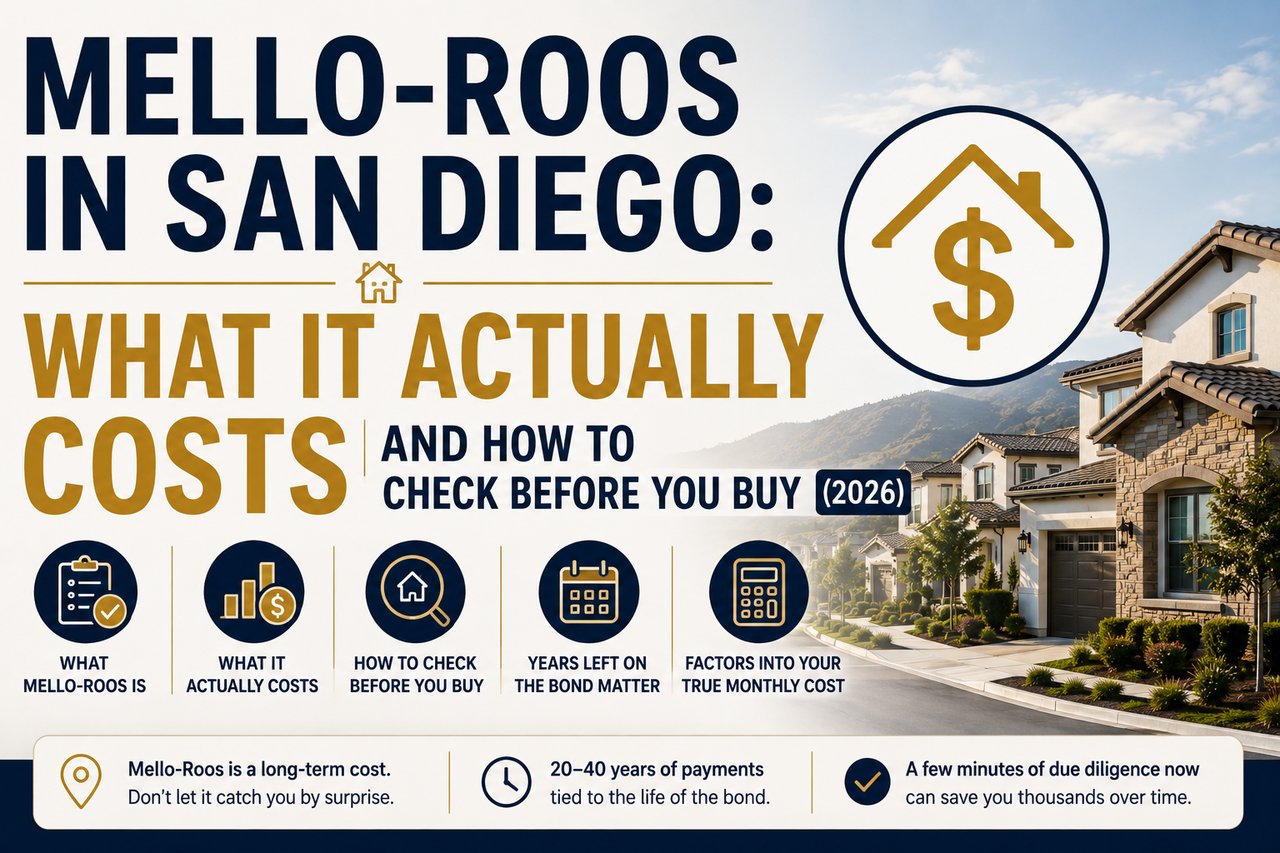
Mello-Roos is the property tax surprise that catches the most San Diego buyers off guard, mostly because it hits exactly the communities that look the most appealing on paper: newer master-planned neighborhoods with good schools, fresh infrastructure, and community amenities. It can add anywhere from a few hundred to well over $10,000 a year on top of the base property tax bill, it doesn't show up in a home's list price, and it's tied to the parcel rather than the buyer. Here's what it is, what it actually costs by community, and how to check before you write an offer.
What Mello-Roos actually is
The Mello-Roos Community Facilities Act of 1982 lets a city or county form a Community Facilities District, or CFD, issue bonds to pay for infrastructure in a new development, things like roads, schools, parks, sewer systems, and utilities, and then repay those bonds through an annual special tax charged directly to the properties inside the district. It exists because Prop 13 limits how quickly general property tax revenue can grow, so when a new master-planned community needs infrastructure built from scratch, Mello-Roos became the mechanism local governments use to fund it without waiting on general fund growth. The tax is attached to the specific parcels within the district boundary, not to the city as a whole, which is why one community can carry a heavy Mello-Roos burden while a neighborhood a few miles away has none at all.
What it actually costs, by community
The dollar amounts vary widely by community and by specific parcel, which is exactly why you can't estimate this from a neighborhood's reputation or a friend's tax bill. In 4S Ranch, Mello-Roos commonly adds close to $7,000 a year on top of the base tax bill. In Del Sur, Carmel Valley, and Santaluz, annual Mello-Roos charges can range from roughly $3,000 to $25,000 or more, depending on the specific bond district and the size of the home. In Otay Ranch and Eastlake, a $750,000 listing might carry more than $6,000 a year in Mello-Roos on top of $8,500 or more in base property tax, while other pockets of Chula Vista's newer communities run closer to $1,500 to $4,000 annually. Across the county, the general range is $500 to $10,000-plus per year.
These aren't one-time fees. Mello-Roos assessments typically run for 20 to 40 years, tied to the life of the bond issue that funded the infrastructure. A $14,400 annual Mello-Roos charge with 20 years left on the bond represents roughly $288,000 in future tax obligations attached to that single property, which is worth sitting with for a moment. That's not a fee you pay once at closing, it's a recurring obligation that runs with the land for decades, and it typically doesn't disappear just because you sell, since it transfers to whoever buys the home next, minus whatever years have already been paid down.
How to check before you write an offer
This isn't hidden information, but you do have to know to look for it, since it rarely shows up in the headline numbers on a listing. California law requires sellers and their agents to disclose Mello-Roos and other special tax obligations before close, typically through a Notice of Special Tax as part of the standard disclosure package. Beyond waiting for disclosures, the county assessor's parcel tax search tool will show any special assessments tied to a specific address, and it's worth pulling that directly rather than relying on a listing agent's general estimate of "typical" taxes for the area, since the amount can vary significantly even between two homes in the same development depending on lot size, phase of construction, and which bond series financed that section.
Before writing an offer on anything built in the last 25 years, especially in North County communities like 4S Ranch, Del Sur, and Carmel Valley, or South Bay communities like Otay Ranch and Eastlake, pull the parcel's tax history directly. It takes a few minutes and it can change the entire monthly math on a purchase.
Why this matters more than the list price sometimes suggests
A home with a lower list price but a $10,000 annual Mello-Roos bill can end up costing more per month than a pricier home in an older, established neighborhood with no special assessment at all. Buyers comparing two listings purely on purchase price and estimated base tax rate are often missing the single biggest variable in the true monthly cost of ownership. This is especially true for buyers stretching their budget to get into a newer community for the schools or amenities, since Mello-Roos can quietly erase a meaningful chunk of what looked like an affordability advantage on paper.
What this means if you're buying
Treat Mello-Roos the way you'd treat HOA dues: a real, recurring monthly cost that belongs in your affordability math from the start, not something to discover after you're in escrow. Ask specifically whether a property sits inside a CFD, get the exact annual amount and the years remaining on the bond, and run your total monthly housing cost, mortgage, base tax, Mello-Roos, and insurance, together before comparing homes across different communities.
What this means if you're selling
If your property sits inside a Mello-Roos district, get ahead of the disclosure rather than letting a buyer discover it mid-escrow. Buyers across San Diego are already pricing carrying costs into offers on condos and HOA communities, and that same scrutiny is extending to special tax districts. Being upfront about the exact amount and the years remaining on the bond, ideally right in the listing, tends to move a sale along faster than hoping a buyer doesn't ask.
Checking your specific property
Mello-Roos amounts are specific to the parcel, not the neighborhood average, so the only way to know the real number is to pull it directly. If you want help checking whether a property you're considering sits inside a CFD, and what that means for your real monthly cost, reach out and we'll pull the numbers together before you write an offer.